
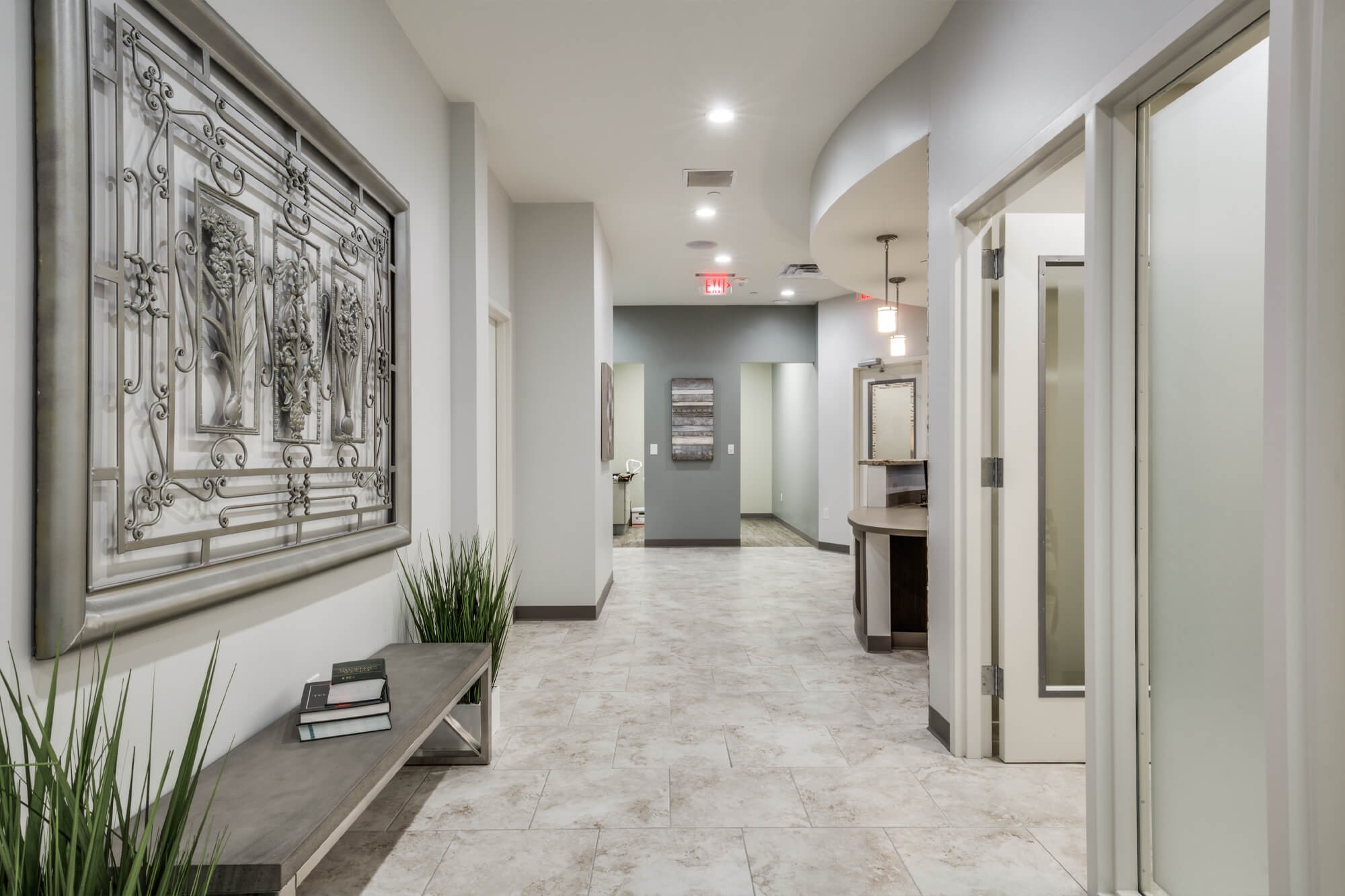
Every dentist we talk to eventually asks some version of the same question: is hiring a dental office designer actually worth it, or is it a line item you could do without? It's a fair question, especially when you're weighing it against equipment, staffing, and marketing budgets that all feel more directly tied to revenue.
Here's our honest answer, shaped by years of walking practice owners through builds, renovations, and relocations: the design of your space isn't decoration; it's infrastructure. It shapes how efficiently your team moves, how confident patients feel the moment they walk in, and whether a patient says yes to the treatment plan sitting in front of them. At Curate Studios, we've worked alongside real estate professionals, architects, bankers, equipment specialists, and contractors on dental practices across the country, and the pattern holds: practices that invest in intentional design see it show up on the bottom line, not just in the reviews.
A dental office interior designer does far more than pick paint colors and furnishings. The work may include:
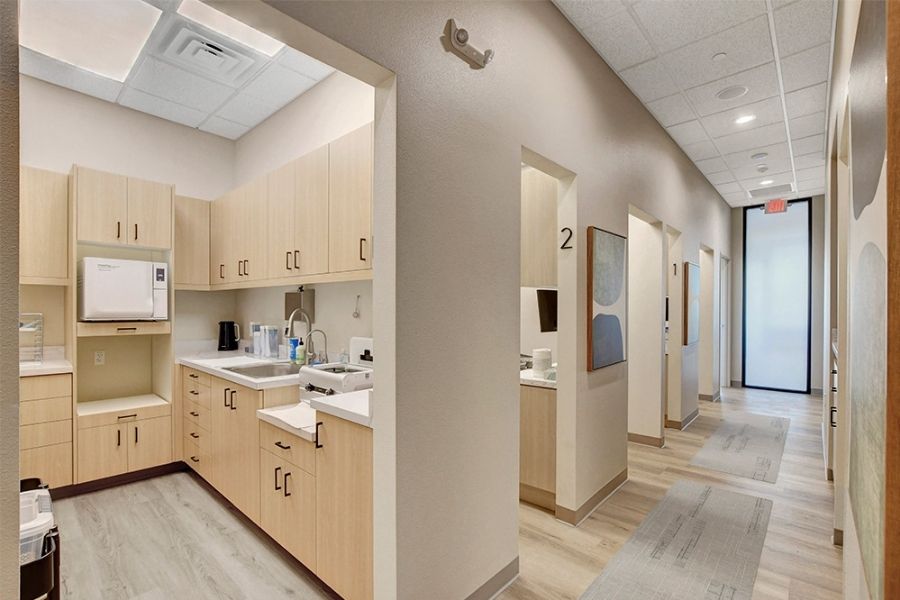
This is where the distinction between a general interior designer and a healthcare-focused designer matters. General design is about aesthetics. Healthcare design has to account for infection control, sterilization workflow, ADA compliance, equipment specifications, and sightlines between reception and treatment areas, all while still creating a space that feels warm and inviting rather than clinical. That dual expertise is the actual product you're paying for.
Skipping professional design doesn't mean skipping the cost. It just moves the cost to later, and usually makes it bigger.
This is the part practice owners underestimate most. Design isn't just how the space looks; it's a direct input into how the business performs.
Patients read visual cues as clinical cues, whether they realize it or not. A space that feels current, clean, and considered builds trust before a single word is exchanged, and that trust makes patients more receptive to accepting treatment plans, including higher-value ones.
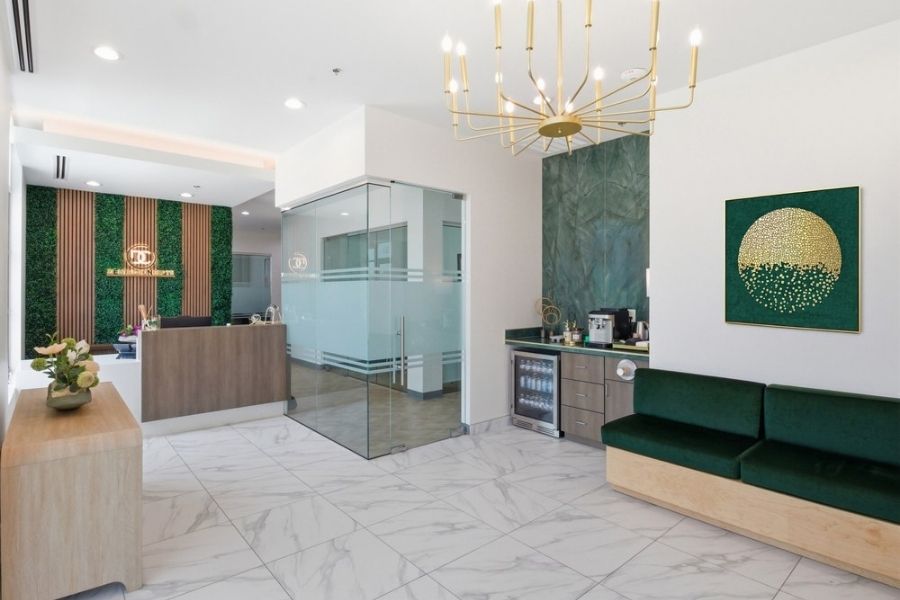
Comfort reduces anxiety, and reduced anxiety keeps patients coming back. A well-designed reception and operatory experience is also simply more memorable, which is exactly what turns a patient into a referral source.
Your space is your brand in three dimensions. A cohesive, well-branded environment reinforces everything your marketing already says about your practice, and gives patients something worth mentioning to friends, family, and on social media.
A layout built around real clinical workflow means less walking, less backtracking, and less daily friction for your team. That efficiency compounds over a full schedule, and a space your team actually enjoys working in is a meaningful factor in staff retention.
Some practice owners consider handling design themselves, or leaning entirely on a contractor or equipment rep to fill the gap. It can work for a very simple project, but it usually costs more time and stress than it saves.
Without an established relationship with healthcare-specific vendors, sourcing finishes and furniture becomes a slow process of trial and error, and mismatched selections often mean costly reordering after the fact. DIY design also tends to optimize for short-term decisions (what looks good in a showroom today) rather than long-term ones (what will hold up to five years of patient traffic and still feel current). A professional design partner is thinking about both from day one.
We'd rather be straightforward about this than oversell it. A full design engagement may not be the right fit for a very small cosmetic refresh, like new paint and a few furniture swaps in an otherwise well-functioning space, or for practices working with an extremely tight budget where even a scaled design package isn't feasible yet. In those cases, a lighter-touch consultation is often a better starting point than a full project, and it's worth asking what's available before assuming it's all or nothing.
The real question isn't whether you can afford to hire a dental office designer. It's whether you can afford the compounding cost of a space that works against your team and your case acceptance for years to come. Thoughtful design is a strategic investment, not an aesthetic upgrade, and the return shows up in patient trust, team efficiency, and the day-to-day experience of running your practice.
If you're weighing a new build, a relocation, or a renovation and want a clear-eyed read on what design could mean for your specific practice, we'd love to talk it through with you. Contact our team today!